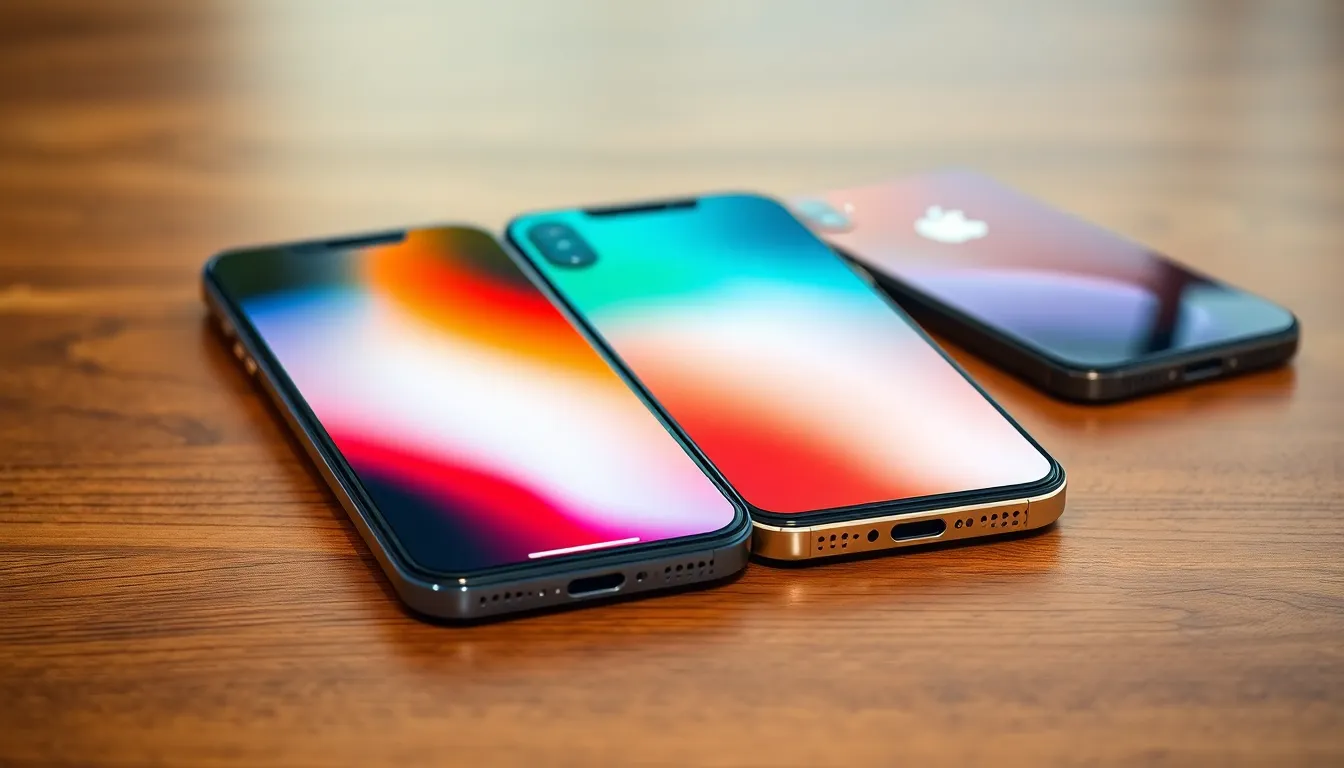

Choosing between the iPhone X, XR, and XS feels like picking a favorite child—each has its charm, but one might just steal your heart. The iPhone X dazzles with its sleek design and stunning OLED display, while the XR boasts vibrant colors and a battery life that could outlast a Netflix binge. Then there’s the XS, the overachiever with its dual-camera system and superior performance.
Overview of iPhone X, XR, and XS
The iPhone X features a sleek design with a 5.8-inch Super Retina OLED display that provides stunning visuals. Dual cameras on the back allow for high-quality photo capturing, making it an excellent choice for photography enthusiasts.
On the other hand, the iPhone XR stands out with its vibrant color options, appealing to users who prefer personalization. Equipped with a 6.1-inch Liquid Retina LCD display, it balances performance and affordability effectively. It offers a remarkable battery life that can last up to 25 hours on a single charge.
The iPhone XS excels in performance with its and A12 Bionic chip, offering faster processing speeds and improved graphics capabilities. This model includes a dual-camera system similar to the X but enhances low-light performance, appealing to serious photographers.
Each device appeals to different user preferences. The iPhone X targets those seeking a premium feel with an OLED display, while the XR caters to users wanting a reliable device with good battery longevity. Meanwhile, the XS serves those who prioritize advanced technology and photography features.
Specifications vary among these models as well. While the iPhone X and XS incorporate glass back designs, the XR features a more robust aluminum frame. Pricing also differs, with the XR typically being the more budget-friendly option among the three.
When choosing between the iPhone X, XR, and XS, potential buyers should consider their individual needs and preferences based on performance, design, and pricing. Each iPhone model offers unique advantages catering to various user interests.
Design and Build Quality
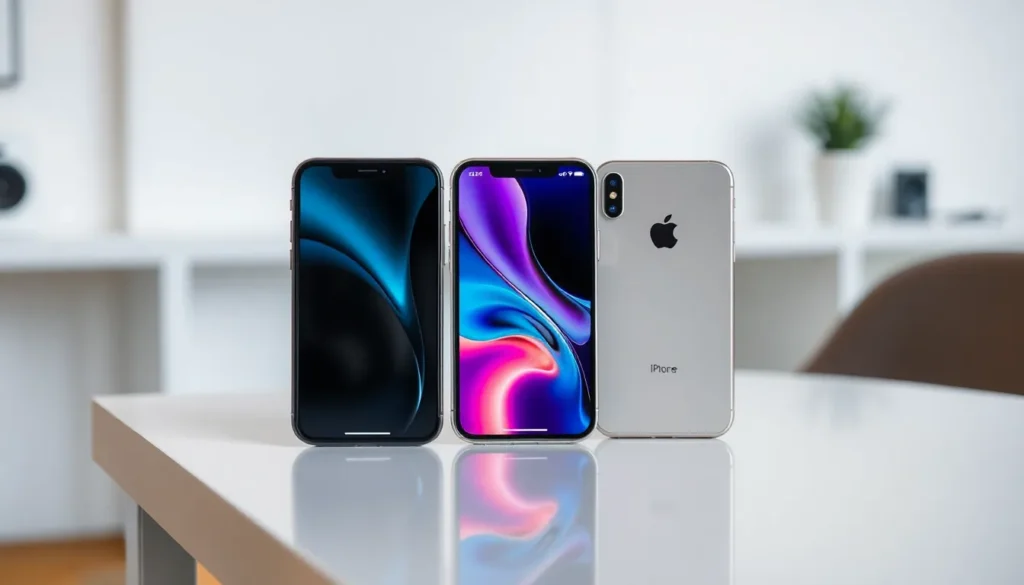
Design and build quality play significant roles in the appeal of the iPhone X, XR, and XS. Each model features distinct characteristics tailored to different user preferences.
iPhone X Design Features
The iPhone X displays a sleek glass design, emphasizing elegance. Its 5.8-inch Super Retina OLED display offers vibrant colors and deep contrasts. Dual cameras sit on the back, housed within a visually pleasing layout. Stainless steel edges contribute to its premium feel, showcasing a sophisticated aesthetic. Users seeking a compact phone will appreciate its size, as it fits comfortably in the hand.
iPhone XR Design Features
The iPhone XR stands out due to its vibrant color selection, including blue, coral, and yellow. A 6.1-inch Liquid Retina LCD display provides an immersive viewing experience with good brightness. Aluminum body construction adds durability, making it less prone to damage. Rounded edges enhance grip, accommodating users who prefer a sturdy hold. This model appeals to individuals looking for personalization without compromising quality.
iPhone XS Design Features
The iPhone XS boasts refined design elements and a glass back, similar to the iPhone X. Its 5.8-inch Super Retina OLED display surpasses many expectations, delivering superior pixel density. With a surgical-grade stainless steel frame, this model enhances durability and elegance. Additionally, the XS offers an IP68 rating for water and dust resistance, ensuring reliability in various environments. Users seeking the pinnacle of design and functionality appreciate its superior build quality.
Display Comparison
Comparing the displays of the iPhone X, XR, and XS reveals distinctions that cater to varying user preferences.
iPhone X Display Specs
The iPhone X features a 5.8-inch Super Retina OLED display. This model supports a resolution of 2436 x 1125 pixels. Brightness levels reach up to 625 nits, providing vivid colors and deep blacks. Users benefit from HDR support, enhancing the viewing experience for media consumption. True Tone technology adjusts the display’s color temperature based on ambient lighting, ensuring accurate content presentation. With a pixel density of 458 ppi, images appear crisp and detailed. The iPhone X excels in providing a high-quality visual experience suitable for photography and media enthusiasts.
iPhone XR Display Specs
The iPhone XR includes a larger 6.1-inch Liquid Retina LCD display. A resolution of 1792 x 828 pixels offers decent clarity, though lower than the X and XS. With a brightness level peaking at 625 nits, colors remain bright and engaging. The display supports wide color and HDR, enhancing viewing for video and photography. Equipped with a pixel density of 326 ppi, the XR ensures acceptable sharpness for daily use. Positioned as a more affordable choice, this model provides a vibrant display that satisfies general viewing needs.
iPhone XS Display Specs
The iPhone XS also showcases a 5.8-inch Super Retina OLED display similar to the iPhone X. It maintains the same resolution of 2436 x 1125 pixels and a peak brightness of 625 nits. Advanced HDR capabilities elevate the visual experience, particularly for high-definition content. The pixel density of 458 ppi results in stunning clarity and detail in images and videos. True Tone technology is present, ensuring color accuracy across various lighting conditions. As a premium option, the XS caters to users who prioritize superior display quality and immersive viewing experiences.
Performance and Battery Life
Performance and battery life significantly influence the choice between the iPhone X, XR, and XS. Each model delivers distinctive capabilities that cater to different user needs.
iPhone X Performance
The iPhone X features the A11 Bionic chip, which provides reliable performance for everyday tasks. This device handles multitasking effectively, whether users play games or run multiple apps simultaneously. With 3GB of RAM, it supports smoother performance for most applications. Additionally, the battery lasts up to 21 hours on a single charge, making it proficient for daily use without frequent recharging.
iPhone XR Performance
On the other hand, the iPhone XR is powered by the A12 Bionic chip, ensuring enhanced speed and efficiency compared to the X. Enhanced gaming experiences and smoother app navigation result from its advanced processing capabilities. Users enjoy extended battery life, lasting up to 25 hours, offering substantial usage time for those who rely heavily on their phones throughout the day. Its performance and battery longevity appeal to users seeking value without sacrificing quality.
iPhone XS Performance
The iPhone XS takes performance a step further with its A12 Bionic chip, ensuring top-tier speed and responsiveness. It supports improved graphics rendering, making it ideal for mobile gaming and demanding applications. With 4GB of RAM, this model handles multitasking flawlessly, ensuring seamless transitions between apps. Battery life stands at up to 20 hours, providing a reliable option for users who prioritize performance alongside adequate battery support in their daily routines.
Camera Capabilities
Camera capabilities vary significantly across the iPhone X, XR, and XS, catering to different photography needs and preferences.
iPhone X Camera Features
The iPhone X features a dual-camera system with a 12 MP wide-angle and telephoto lens. Users benefit from optical image stabilization, enhancing image clarity in low-light settings. Portrait mode allows for stunning depth-of-field effects, making subjects stand out against blurred backgrounds. Capturing 4K video at 60 fps ensures high-quality recordings, appealing to videographers. Additionally, the front-facing 7 MP camera includes Portrait Lighting for enhanced selfies.
iPhone XR Camera Features
Highlighting affordability, the iPhone XR sports a single 12 MP rear camera optimized for versatility. This model excels with Smart HDR technology, capturing vibrant colors and impressive details. The Portrait mode is available as well, although it relies solely on software for depth effects. Users enjoy 4K video recording at 60 fps, making it suitable for casual filmmakers. With a 7 MP front camera featuring Portrait Mode, users can achieve eye-catching selfies, too.
iPhone XS Camera Features
Equipped with a dual-camera system similar to the iPhone X, the iPhone XS enhances low-light photography through advanced sensor technology. It introduces Smart HDR, producing images with richer detail in shadows and highlights. Portrait mode benefits from advanced bokeh control, allowing users to adjust depth after taking photos. Video recording capabilities include 4K at 60 fps, appealing to content creators seeking professional quality. A 7 MP front camera also showcases Portrait mode and Smart HDR, providing striking selfies.
Price and Value for Money
Pricing varies across the iPhone X, XR, and XS models, impacting their overall value propositions. The iPhone X typically retails for around $400, targeting users seeking a compact and premium design. With a price point of approximately $300, the XR appeals strongly to budget-conscious individuals who appreciate color variety and durability.
Another notable distinction arises with the iPhone XS, priced around $500, positioning itself as a high-performance option for serious users. Each model offers unique features that correspond with varying budgets and user preferences. Customers prioritizing advanced technology may find the XS’s enhanced performance and low-light capabilities worth the additional investment.
Conversely, the XR’s attractive pricing makes it an enticing option for those requiring basic smartphone functionality without compromising on essential features. Value comes from its outstanding battery life of up to 25 hours, providing longevity for all-day use.
The X, while a bit dated, remains appealing due to its classic design and similar display technology to the XS. Pricing strategies reflect demand shifts in the market, highlighting these models’ gradual depreciation. Users shopping for a device often assess both current prices and potential long-term benefits.
For individuals weighing budget against performance, these price ranges help clarify their choices. Making an informed decision requires examining how each model’s features align with personal needs.
Choosing between the iPhone X, XR, and XS ultimately depends on individual priorities. For those who value a compact design and premium feel the iPhone X shines with its elegant aesthetics and dual-camera system. The iPhone XR stands out for users seeking affordability and vibrant options paired with impressive battery life. Meanwhile the iPhone XS caters to tech enthusiasts demanding top performance and advanced photography features.
Each model brings unique strengths to the table. Evaluating personal preferences in design, functionality, and budget will guide potential buyers toward the best choice for their needs.